Digital printing
Digital printing is becoming more and more popular, and it brings many practical benefits. First of all, from a technical point of view, it does not require a traditional “make-ready.” In practice, this means the data goes straight to the digital press via a digital connection. As a result, the image is printed without preparing printing plates, without wasting material for start-up sheets, and without time-consuming registration. Therefore you save time and substrate, and consequently you also reduce overall costs. For this reason, digital printing works perfectly for runs up to a few hundred pieces. With low quantities, the cost of plates and set-up waste in offset printing can noticeably increase the price of the job.
That is why we strongly recommend digital printing for short runs and for projects that require personalization. Moreover, when it comes to variable and personalized printing, there is currently no real alternative to this technology. Thanks to direct, instant data transfer from the controller to the press, you can introduce changes in names, codes, or serial numbers even during the print run.
Key advantages of digital printing
- Fast turnaround – here, “ready right away” truly applies, because the process starts almost immediately after uploading the file.
- Small print runs – digital printing is unmatched in this category, so you avoid unnecessary set-up costs.
- Personalization – something that is currently very hard to achieve with classic offset presses.
- Cost-effective for low quantities – no plates, less material waste, and less chemistry lead to a better price for short runs.
- One test copy – additionally, you can print a single sample copy, which offset typically cannot provide in the same way.
How is digital printing produced?
There are four main forms of digital printing: laser, inkjet, thermal transfer, and dye-sublimation. Below we explain how each of them works, so you can better understand the process and choose the right solution.
Laser printing (electrophotographic)
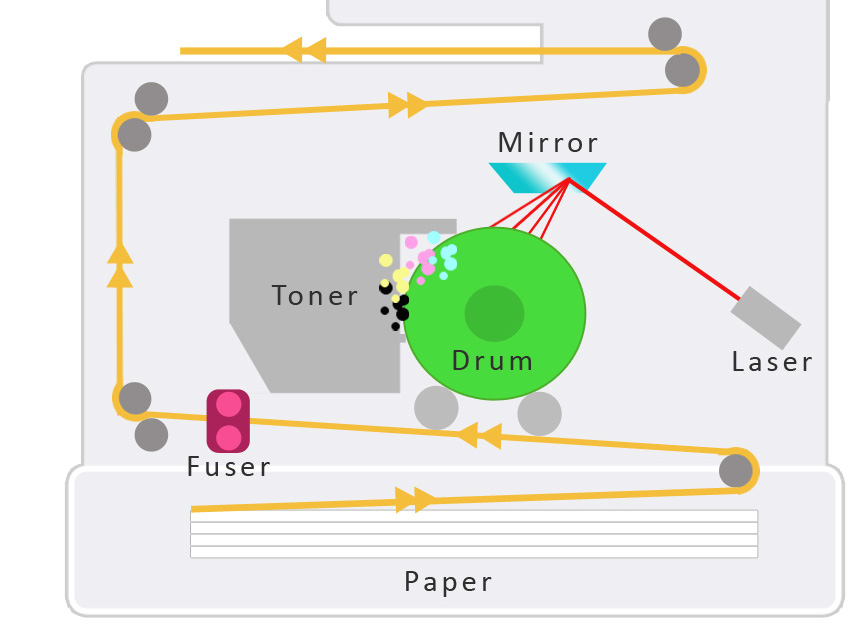
Laser printing, also known as electrophotographic printing, is most commonly found in offices, schools, and universities. First, data from the computer is processed, and then a laser beam exposes an electrostatically charged drum. The latent image is transferred onto the substrate using toner powder, and finally high temperature fuses it permanently to the paper.
Inkjet printing
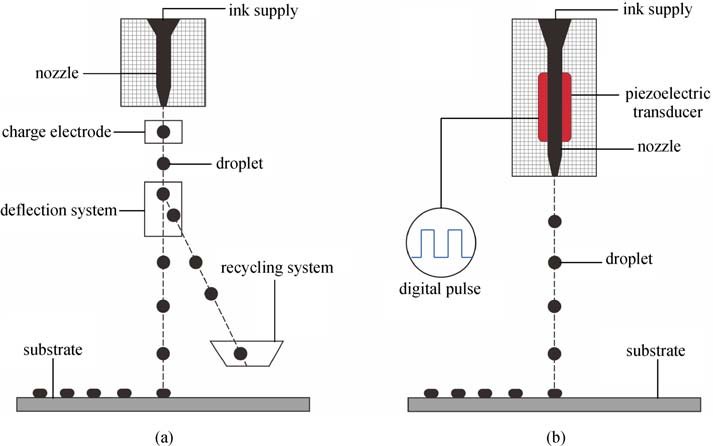
Inkjet devices use a printhead and a pressure system that sprays tiny ink droplets onto the surface. Since the head is controlled by digital impulses, the image reproduction can be very precise. Moreover, this technology uses either a continuous stream of droplets or single-drop impulses. Inkjet is widely used in industrial printing, large format, production runs, and also in sublimation workflows.
Thermal transfer printing
In thermal transfer printing, the image is created on a thermal transfer ribbon/foil. Then the ribbon is pressed onto the substrate and fixed using high temperature. As a result, the print becomes durable and stable, which is why this method is often chosen for functional markings.
Dye-sublimation printing
Dye-sublimation printing uses sublimation inks. First, the image is printed onto a transfer foil or transfer paper. Next, it is pressed onto the final surface and exposed to heat. This process causes the dye to penetrate the fibers and bond permanently. Therefore the result looks like the print is fused with the material, which gives a smooth and long-lasting effect.
Limitations of digital printing
Does digital printing have downsides? Yes, however compared with its benefits, there are relatively few. Moreover, technology keeps evolving, so some points may become outdated over time, therefore it’s worth keeping that in mind.
- Quality vs. offset: Not every digital press matches offset quality (and this statement may already be outdated on the day you read it).
- Unit cost at higher volumes: A stable per-piece price is great for single items, yet at larger runs it becomes a limitation.
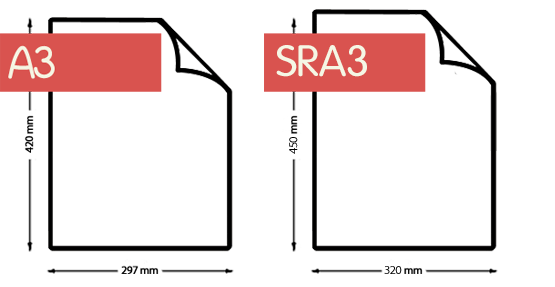
- Format constraints: Not every machine supports formats larger than SRA3 (again, this may change as equipment develops).
- Very high board weights: Another limitation can be the lack of capability to print on very heavy solid board grammages.
Need help choosing the right method? Write to us and describe your project—then we’ll recommend whether digital printing or offset will work better.